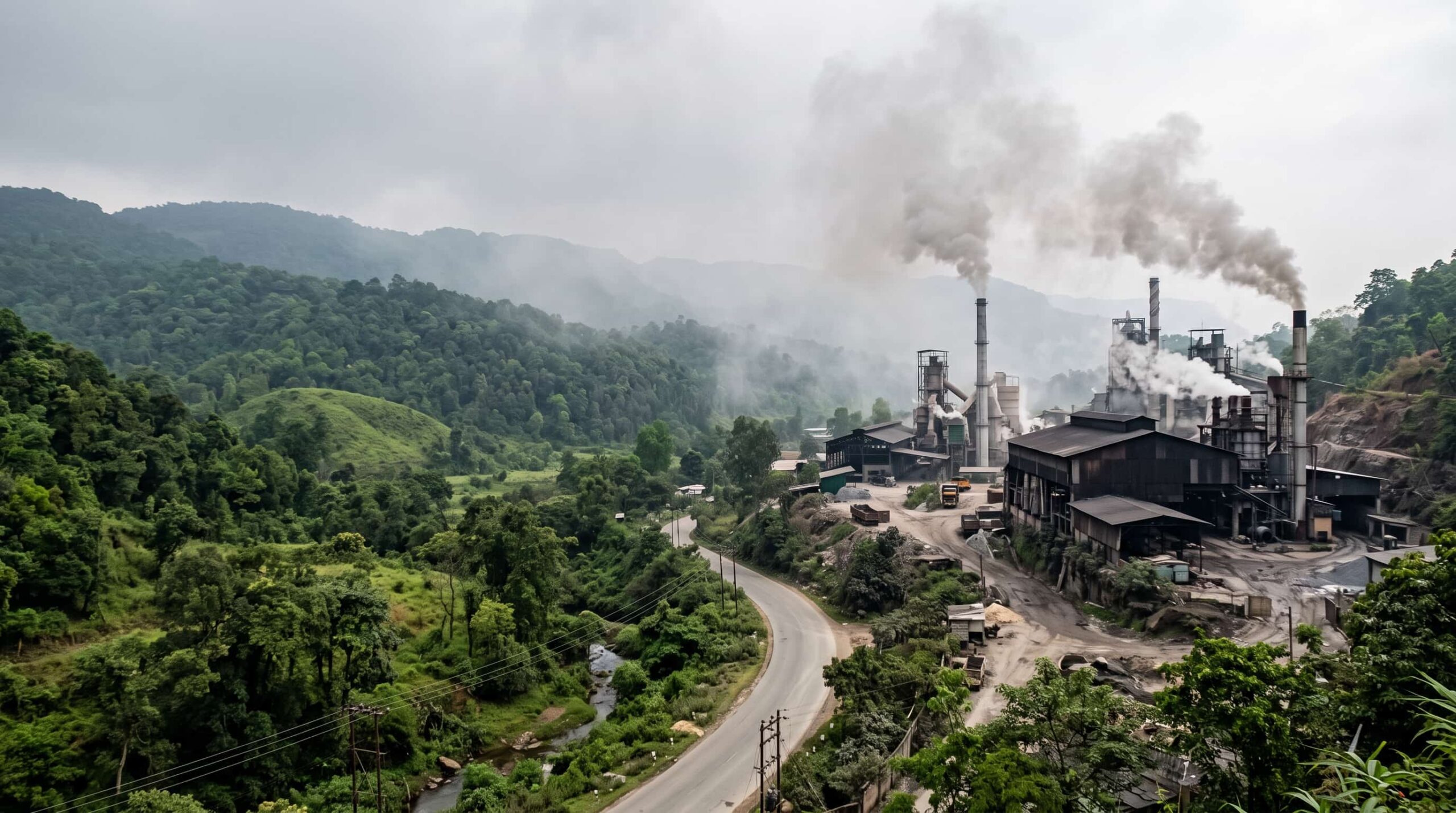
For years, India’s air pollution conversation has revolved around major metropolitan areas such as Delhi, Mumbai, and Kolkata. Yet far from these urban centers, a smaller industrial town on the Assam-Meghalaya border has quietly emerged as one of the country’s most alarming pollution hotspots. Byrnihat, known for its concentration of industries and manufacturing activity, has repeatedly recorded hazardous air quality levels, drawing attention from environmental experts and public health advocates alike.
For residents, however, the crisis is not defined by AQI rankings or pollution reports. It is reflected in the air they breathe every day, the respiratory problems that have become increasingly common, and the growing concern that economic growth is coming at the expense of public health.
The story of Byrnihat is not just about pollution. It is about what happens when industrial expansion, weak environmental enforcement, and ambitious policy goals converge without sufficient safeguards for the communities living nearby.
What Byrnihat’s AQI Data Is Telling Us
Air Quality Index (AQI) readings serve as an important indicator of public health risk. When AQI levels regularly enter the “Poor,” “Very Poor,” or “Severe” categories, they signal elevated concentrations of pollutants that can have significant short-term and long-term health consequences.
In Byrnihat, particulate pollution—particularly PM2.5 and PM10—has become a major concern. These tiny particles are among the most dangerous air pollutants because they can penetrate deep into the respiratory system. PM2.5 particles are especially harmful due to their ability to enter the bloodstream and affect multiple organs beyond the lungs.
Unlike pollution episodes driven purely by seasonal weather conditions, Byrnihat’s air quality challenges appear closely linked to ongoing industrial and transportation-related activities. This means residents may be exposed to unhealthy air for extended periods throughout the year rather than only during occasional pollution spikes.
Industrial Growth and the Rising Pollution Burden
Byrnihat’s transformation into an industrial hub has brought undeniable economic benefits. Manufacturing units, processing facilities, warehouses, and transport infrastructure have generated employment and contributed to regional development. However, rapid industrialization has also increased environmental pressure on a region that now struggles with deteriorating air quality.
Key Sources Behind the Pollution Burden
While public debates often focus on individual industries, environmental experts generally point to a combination of factors contributing to Byrnihat’s poor air quality:
- Industrial emissions from manufacturing and processing facilities.
- Heavy truck traffic transporting raw materials and finished products.
- Road dust generated by freight movement.
- Construction and infrastructure-related activities.
- Open waste burning and other localized pollution sources.
Individually, these sources may seem manageable. Collectively, they create a pollution load capable of pushing AQI readings into unhealthy ranges and exposing local communities to sustained environmental risks.
The Ethanol Expansion Debate
One of the most controversial environmental discussions linked to industrial growth in recent years has been India’s aggressive ethanol expansion program. The policy, strongly championed by Nitin Gadkari, seeks to reduce India’s dependence on imported crude oil while promoting alternative fuels and increasing economic opportunities for farmers.
The government’s ethanol blending targets have been presented as a win-win strategy for energy security and rural development. Supporters argue that greater ethanol use can reduce fossil fuel consumption and help India lower its import bill.
The Environmental Questions Around Ethanol Production
While ethanol is often promoted as a cleaner fuel, critics argue that the environmental impact of producing the fuel receives far less attention than the benefits associated with using it. Large-scale ethanol production requires industrial facilities, transportation networks, boilers, water resources, and waste-management systems, all of which can have environmental consequences if not properly regulated.
In Byrnihat, concerns have emerged regarding whether expanding industrial activity—including ethanol-related operations where present—is adding pressure to an already stressed environment. It is important to note that there is currently no conclusive public evidence identifying ethanol plants alone as the primary source of Byrnihat’s pollution crisis. However, the debate highlights a broader concern about whether industrial approvals are being granted faster than environmental safeguards can be strengthened.
The issue is not necessarily ethanol itself. Rather, it is whether India’s push toward alternative fuels is being matched by equally robust environmental oversight and accountability mechanisms.
The Health Cost of Poor Air Quality
Behind every AQI reading are people whose health may be affected by prolonged exposure to polluted air. Air pollution is now recognized as one of the world’s most serious environmental health threats, contributing to respiratory diseases, cardiovascular disorders, and millions of premature deaths globally each year.
Why PM2.5 Exposure Matters
PM2.5 particles are small enough to bypass many of the body’s natural defense mechanisms. Once inhaled, they can penetrate deep into the lungs and enter the bloodstream, potentially affecting the heart, brain, and other organs.
For residents living in areas with consistently poor air quality, common health concerns include:
- Persistent coughing and throat irritation.
- Increased asthma attacks and breathing difficulties.
- Eye irritation and headaches.
- Reduced lung function over time.
- Greater risk of heart disease and stroke.
Children, senior citizens, and individuals with pre-existing respiratory conditions face the highest risks. For these groups, repeated exposure to unhealthy air can have long-lasting consequences that extend well beyond temporary discomfort.
Regulatory Failure or Policy Blind Spot?
One of the most troubling aspects of Byrnihat’s pollution crisis is that it did not emerge overnight. Concerns regarding industrial emissions and air quality have existed for years, yet pollution levels continued to rise despite growing evidence of environmental stress.
This raises important questions about regulatory oversight. Were environmental compliance standards enforced consistently? Were emissions monitored effectively? Were communities adequately informed about the risks they faced?
Environmental regulations are only as effective as their implementation. When enforcement mechanisms fail to keep pace with industrial growth, local residents often bear the consequences. The Byrnihat situation highlights a broader challenge facing India: balancing economic development with environmental protection in a way that does not sacrifice public health.
What Byrnihat Means for India’s Air Quality Future
Byrnihat’s experience serves as a warning for other rapidly industrializing regions across the country. As India continues to expand manufacturing, infrastructure, and alternative fuel production, environmental safeguards must evolve at the same pace.
The success of any industrial or energy policy should not be measured solely by production targets, investment figures, or fuel-blending achievements. It should also be measured by whether nearby communities enjoy cleaner air, better health outcomes, and a safer environment.
For AQI observers, Byrnihat is more than a local pollution story. It is a reminder that clean energy goals and clean air goals are not always the same thing. Without strong monitoring, transparent reporting, and effective enforcement, even well-intentioned policies can create unintended environmental consequences.
As policymakers debate the future of industrial growth and ethanol expansion, Byrnihat stands as a crucial test case. The lessons learned here may ultimately shape how India balances development, energy security, and the fundamental right to breathe clean air.